
Currently Empty: ₹0.00
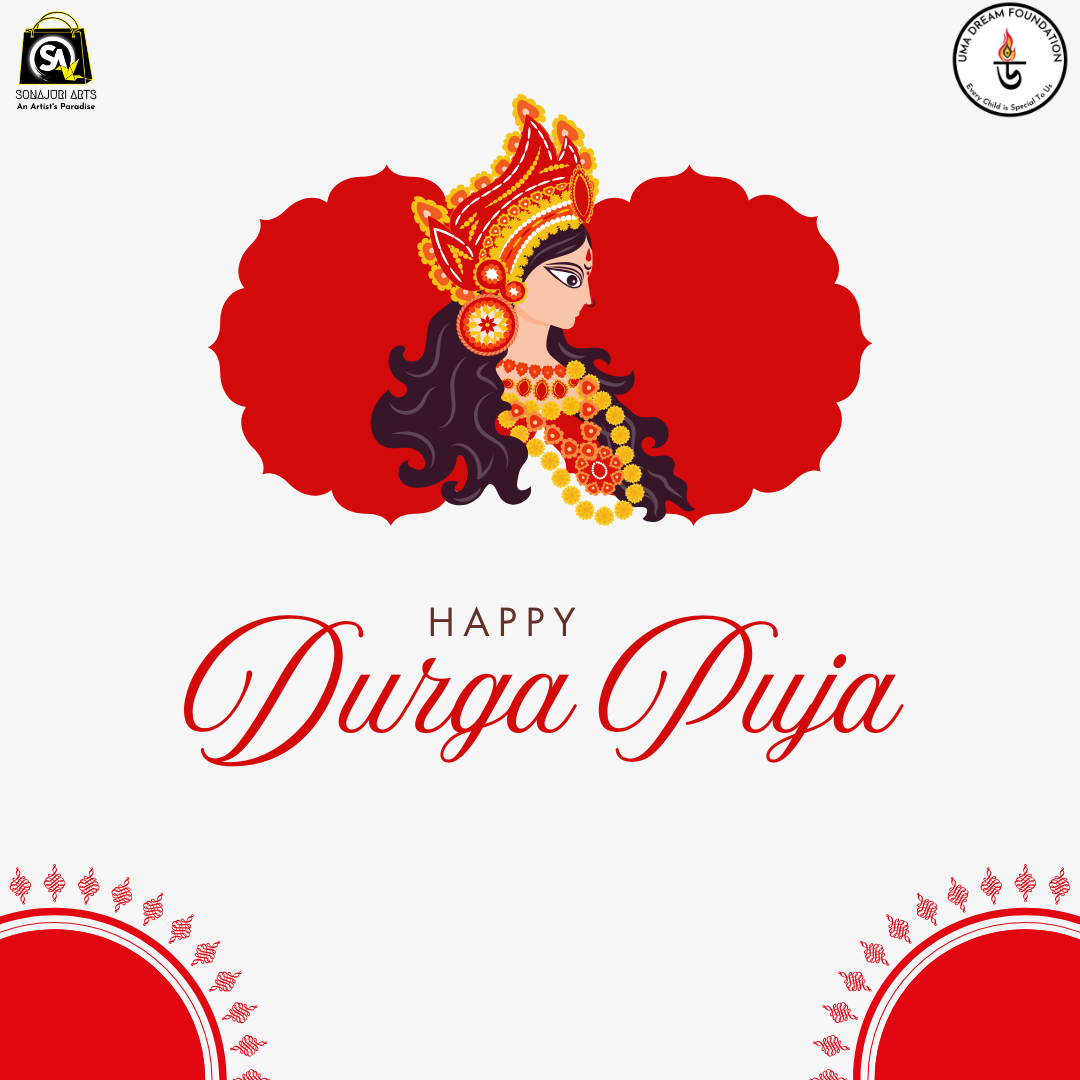
Every autumn, as the oppressive heat of summer yields to the gentle, breezy mornings of Sharad Ritu (the autumn season), the Indian subcontinent undergoes a breathtaking metamorphosis. Blue skies scattered with fluffy white clouds (kash phool blooms along riverbanks) announce an unmistakable shift in the atmosphere. It is the arrival of the grandest festive season of the year—a time when history, myth, ritual, and human emotion converge.
At the heart of this seasonal transformation are two closely intertwined, deeply revered, yet culturally distinct celebrations: Durga Puja and Dussehra (also known as Vijayadashami).
While both festivals celebrate the universal truth of Dharma—the ultimate triumph of good over evil—they reflect different cultural dimensions, mythological narratives, and regional expressions. Together, they form a vivid tapestry of art, devotion, community, and storytelling that has endured for centuries.
1. The Divine Narratives: Tales of Celestial Victory
To truly appreciate the cultural weight of Durga Puja and Dussehra, one must first step back into the realm of sacred myth. Both celebrations celebrate monumental victories of divine light over cosmic darkness, drawing from ancient texts such as the Devi Mahatmyam (from the Markandeya Purana) and the great epic Ramayana.
The Battle for Cosmic Balance: Maa Durga and Mahishasura
The story of Durga Puja centers on the fierce form of the Divine Mother—Goddess Durga. According to Hindu mythology, the demon king Mahishasura had obtained a boon from Lord Brahma: no man, god, or animal could defeat him. Emboldened by his invincibility, Mahishasura unleashed terror across the three worlds, driving the gods (devas) out of their heavenly realm (Swarga).
Unable to defeat him individually, the Holy Trinity—Brahma, Vishnu, and Shiva—along with all the lesser deities, pooled their divine energies (tejas). From this glowing, blinding confluence of light emerged Goddess Durga, the personification of Shakti (primordial feminine energy).
Each deity bestowed upon her a formidable weapon:
- Lord Shiva gave her the Trishula (Trident).
- Lord Vishnu granted the Sudarshana Chakra (Discus).
- Lord Varuna gifted the Sankha (Conch Shell).
- Lord Agni presented the Pash (Spear/Lethal Flame).
- Lord Vayu gave the Bow and Arrows.
- Himalaya provided her fierce mount: the majestic Lion.
For nine days and nine nights, a battle raged between Maa Durga and Mahishasura’s demon armies. On the tenth day—Vijayadashami—the Goddess pierced Mahishasura with her trident as he attempted to transform from a water buffalo into a man, slaving the demon and restoring cosmic order. Thus, she earned the epithet Mahishasuramardini (The Slayer of Mahishasura).
                      [ Divine Energy / Shakti ]
                                  |
            +---------------------+---------------------+
            |                                           |
    [ Durga Puja ]                                [ Dussehra ]
    • Defeat of Mahishasura                       • Defeat of Ravana
    • Celebration of Divine Feminine               • Triumph of Righteousness (Rama)
    • Homecoming of Mother & Children              • Destruction of Ego & Greed
The Hero’s Journey: Lord Rama and Ravana
Simultaneously, the northern, western, and southern parts of India link this period to the epic Ramayana. Lord Rama, along with his brother Lakshmana and the Vana Sena (monkey army), waged war against Ravana, the mighty ten-headed demon king of Lanka who had abducted Rama’s wife, Sita.
Mythology states that before entering the final conflict with Ravana, Lord Rama performed an unseasonal invocation (Akalbodhan) of Goddess Durga during autumn to seek her cosmic blessings. Empowered by her divine grace, Rama vanquished Ravana on the tenth day of the conflict. This victory is celebrated nationwide as Dussehra (derived from Dasha-hara, meaning the removal of the ten heads/evils).
2. Sacred Traditions and Rituals Unveiled
The spiritual depth of both Durga Puja and Dussehra is made tangible through intricate, deeply symbolic rituals that span ten days.
| Phase / Day | Durga Puja Tradition | Dussehra Tradition | Deep Cultural Significance |
| Mahalaya | Chakkhu Daan (Painting the eyes) & Invocation Chants | Beginning of Ramlila performances | Inviting the divine presence into the physical world. |
| Shatru / Saptami / Ashtami | Pushpanjali & Sandhi Puja | Garba, Dandiya Raas, & Fasting | Deep devotion, inner purification, and high spiritual energy. |
| Nabami | Dhunuchi Naach & Bhog distribution | Final staging of Lanka Dahan | Peak community celebration and sharing of sacred offerings. |
| Dashami / Dussehra | Sindoor Khela & Visarjan | Ravan Dahan (Burning effigies) | Accepting the cycle of life, renewal, and victory over dark traits. |
Mahalaya: The Dawn of the Goddess
Durga Puja officially begins at the pre-dawn hour of Mahalaya. Long before sunrise, families tune in to the legendary radio recital Mahishasuramardini narrated in the melodious, powerful voice of Birendra Krishna Bhadra. The echoing sound of the Sankha (conch shell) and chanting of chandi path mark the awakening of the Goddess and the start of Devipaksha.
On this day, artisans in places like Kumartuli in Kolkata perform Chakkhu Daan—the symbolic ritual of painting the eyes of the Goddess idol, imparting soul and life into the clay sculpture.
       [ Mahalaya (Chandi Path & Chakkhu Daan) ]
                          │
                          ▼
       [ Saptami & Ashtami (Pushpanjali & Sandhi Puja) ]
                          │
                          ▼
       [ Nabami (Dhunuchi Naach & Community Bhog) ]
                          │
                          ▼
       [ Dashami (Sindoor Khela, Visarjan & Ravan Dahan) ]
Sandhi Puja: The Zenith of Divine Power
The transition between the 8th day (Maha Ashtami) and 9th day (Maha Navami) marks Sandhi Puja, the most potent ritual moment of Durga Puja. Lasting exactly 48 minutes (the last 24 minutes of Ashtami and the first 24 minutes of Navami), this moment commemorates the exact instance Goddess Durga manifested as Chandi to defeat the demon generals Chanda and Munda.
During this ritual, 108 lotus flowers are offered, 108 brass lamps (diyas) are lit, and the rhythmic beat of the Dhak (traditional drums) reaches a fever pitch.
Dhunuchi Naach: The Dance of Fire and Fragrance
On Navami evening, devotees perform the mesmerizing Dhunuchi Naach. Holding clay censers (dhunuchi) filled with burning coconut husk, frankincense (dhuno), and camphor, dancers perform rhythmic steps to the intoxicating, booming beats of the Dhak. It is both an act of ritual purification and a ecstatic expression of art and devotion.
Sindoor Khela and Visarjan: Bittersweet Farewells
On Maha Dashami, the mood shifts from exuberance to poignant sorrow. Maa Durga is bid farewell as she prepares to return to her celestial home on Mount Kailash with her divine children (Lakshmi, Saraswati, Ganesha, and Kartikeya).
Married women participate in Sindoor Khela, applying vermilion (sindoor) to the feet and forehead of the Goddess, and then smearing it playfully on each other’s faces, wishing for health, prosperity, and marital longevity. Following this, the clay idols are immersed (Visarjan) in nearby rivers or water bodies. As the idol submerges, chants echo across the shore:
“Asche bochhor abar hobe!” (It will happen again next year!)
Ravan Dahan: The Flaming Triumph over Evil
While Durga Puja immerses in water, Dussehra climaxes in fire. On Dussehra evening, massive open grounds (Ramlila Maidans) across India gather thousands of spectators to witness Ravan Dahan. Giant, towering effigies of Ravana, his brother Kumbhakarna, and his son Meghnada—stuffed with firecrackers—are set ablaze by an actor playing Lord Rama, who shoots a flaming arrow into their hearts.
As the effigies crackle and fall into ashes, the crowds burst into celebratory cheers, reminding everyone that no matter how powerful evil or arrogance appears, it will eventually burn away before the light of truth.
3. Cultural Diversity & Regional Variations
While the overarching theme remains the triumph of righteous power, Durga Puja and Dussehra are celebrated with remarkable diversity across India’s geographical landscape.
                  ┌─────────────────────────────────────────┐
                  │   Pan-Indian Celebrations of Good     │
                  └────────────────────┬────────────────────┘
                                       │
         ┌─────────────────────────────┼─────────────────────────────┐
         ▼                             ▼                             ▼
  [ EAST INDIA ]                [ WEST INDIA ]                [ SOUTH INDIA ]
  • Kolkata & Bengal            • Gujarat & Maharashtra       • Mysuru & Tamil Nadu
  • Elaborate Art Pandals       • 9 Nights of Garba/Dandiya   • Royal Procession (Jumboo Savari)
  • Dhunuchi Naach & Bhog       • Reverence for Maa Amba      • Golu Doll Displays
1. Bengal and the East: Pandal Artistry as Living Heritage
In West Bengal, Tripura, and Assam, Durga Puja transcends mere religion—it becomes the world’s largest open-air art installation. Neighborhoods construct gigantic temporary temples and artistic pavilions called Pandals. These structures explore diverse themes, ranging from ancient architectural marvels and environmental conservation to modern social commentaries and classical art forms.
UNESCO formally recognized Durga Puja in Kolkata on its Representative List of the Intangible Cultural Heritage of Humanity, acknowledging its extraordinary blend of indigenous craftsmanship, inclusion, and public participation.
2. Gujarat and the West: The Rhythms of Garba
In Western India, particularly Gujarat, the nine nights of Navratri are celebrated with the dynamic folk dances Garba and Dandiya Raas. Circles of dancers clad in vibrant Chaniya Cholis and Kediyas dance around a central lamp or an image of Goddess Amba. The circular motion represents the cyclical nature of time, life, and the universe, remaining anchored around the eternal divine center.
3. Mysuru: Royal Splendor and Grandeur
In Mysuru (Karnataka), Dussehra is celebrated as Nada Habba (the State Festival). This tradition traces back to the 14th-century Vijayanagara Empire. The world-famous Mysuru Palace is illuminated with over 100,000 bulbs.
On Vijayadashami, the grand Jumboo Savari (elephant procession) takes place, where a decorated royal elephant carries an idol of Goddess Chamundeshwari seated in a 750-kilogram golden howdah (palanquin) through the streets of the city.
4. Kullu Valley: The Gathering of Deities
In the serene hills of Kullu, Himachal Pradesh, Kullu Dussehra begins on the very day when the rest of the country concludes its celebrations. Over 200 local deities (devtas) from surrounding mountain villages are brought in elaborate palanquins to the Dhalpur Maidan to pay homage to Lord Raghunath (Lord Rama), creating a spiritual pilgrimage like no other.
5. Tamil Nadu and South India: The Sacred Golu
In Tamil Nadu, Karnataka, and Andhra Pradesh, families construct a multi-tiered step platform called Bommai Golu (Doll Display). Miniature figurines of gods, goddesses, saints, and everyday rural scenes are carefully arranged. Neighbors invite one another to view the Golu, exchange gifts, sing devotional hymns, and share nutritious prasad made of sprouted legumes (Sundal).
4. Modern Relevance: Universal Lessons for Today
Beyond the grandeur, music, and spectacles, Durga Puja and Dussehra carry profound relevance for our modern, everyday lives. The ancient myths offer timeless philosophical insights:
- Embracing the Divine Feminine (Shakti): Long before modern discourse on women empowerment, these festivals placed feminine strength at the absolute apex of cosmic cosmic power. Goddess Durga is not a passive consort; she is an active, invincible warrior who protects creation when male deities falter.
- Destruction of the Inner Ego: The ten heads of Ravana symbolize human vices: Lust (Kama), Anger (Krodha), Delusion (Moha), Greed (Lobha), Pride (Mada), Envy (Matsarya), Mind (Manas), Intellect (Buddhi), Will (Chitta), and Ego (Ahamkara). Burning the effigy of Ravana serves as an annual pledge to destroy our own internal flaws.
- Community and Inclusivity: The Pandals and Ramlila grounds bring together people across all economic strata, castes, and creeds. Artisans, musicians, weavers, lighting designers, and street vendors work in harmony, demonstrating how art and culture can unite humanity.
- Ecological Consciousness: Modern celebrations are increasingly returning to their eco-friendly roots. Communities are prioritizing lead-free paints, natural clay idols, biodegradable pandal decorations, and localized artificial immersion tanks to protect natural water systems.
5. Conclusion: The Light That Endures
Durga Puja and Dussehra are far more than seasonal calendar events. They represent a eternal rhythm of destruction and creation, of fierce battles and joyful homecomings. They remind us that no matter how dark the shadows of ignorance, injustice, or despair become, the light of Dharma and Shakti will always prevail.
As the fires of Ravan Dahan fade into twilight and the clay form of Maa Durga dissolves into the sacred waters, they leave behind no sense of true loss—only an enduring hope, a renewed spirit of togetherness, and the comforting promise that righteousness will rise again, year after year.
